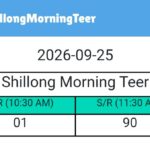

Morning Teer is a traditional archery-based game associated with Meghalaya and the northeastern region of India. Over the years, it has become a familiar name among people who follow Teer results, previous-result charts, daily numbers, statistics, and historical records.
For regular followers, checking the Morning Teer result can become part of a daily routine. Some people visit result websites to check the latest number, while others are interested in previous results and historical charts. Searches such as Morning Teer result, Morning Teer today, Morning Teer number, Morning Teer previous result, Morning Teer result chart, common number, and Teer statistics are commonly associated with this type of information.
But Morning Teer is more than simply a number displayed on a result page. Its identity comes from the traditional archery activity behind the result. Understanding how the game works, how results are recorded, and how historical data should be interpreted can make it much easier for newcomers to understand the subject.
This guide explains Morning Teer in simple language and covers its background, results, rounds, charts, statistics, common-number discussions, and frequently asked questions.
What Is Morning Teer?
Morning Teer refers to a Teer-related event or round that takes place during the morning period. The term “Teer” is connected with arrows, reflecting the game’s traditional relationship with archery.
In a Teer event, archers shoot a large number of arrows toward a designated target. After the shooting session, the arrows that have struck the target are counted according to the rules of the particular event. The resulting count is then used to determine the published result.
This makes Teer different from a conventional lottery draw. Instead of a machine or numbered ball determining the result, the result is connected to an organized archery session.
The exact schedule, procedures, and result format can differ between Teer organizations. Anyone following a particular Morning Teer event should therefore check the information provided by the relevant authorized source.
Morning Teer Result
The Morning Teer result is the information most people look for after a round has been completed.
A Teer result is commonly displayed as a two-digit number. A result page may present the information in a format such as:
FR: 24 | SR: 68
In this format, FR normally refers to the First Round, while SR refers to the Second Round.
The result page may also contain the date, event name, round information, and links to previous results.
When checking a result, the date is particularly important. A number published for an earlier day should not be mistaken for the current result. Similarly, different Teer events may have different schedules, so readers should make sure they are looking at the correct event.
How Does Morning Teer Work?
The basic process is connected to archery.
During a scheduled round, participating archers shoot arrows toward a target. Once the shooting is finished, the arrows that have hit the target are counted.
The resulting number is processed according to the rules of the particular Teer organization, and the final result is then published.
The important point is that the published result belongs to a completed round. A previous chart or a prediction found online does not determine the actual outcome.
This is also why readers should distinguish between an official result and an online prediction. They are not the same thing.
First Round and Second Round
Many people who follow Teer results will see the terms FR and SR on result pages.
- FR – First Round
- SR – Second Round
The two rounds are recorded separately. A result page might therefore display something like:
| Round | Result |
|---|---|
| First Round (FR) | 24 |
| Second Round (SR) | 68 |
The numbers above are simply an example of how results can be displayed.
Keeping the two rounds separate is useful when creating a historical chart. It prevents readers from accidentally treating an FR result as an SR result.
Morning Teer Previous Result
Previous results are an important part of the Teer information ecosystem.
People may check the Morning Teer previous result for several reasons. Someone may have missed yesterday’s result, while another person may want to review several weeks of historical data.
A previous-result chart can make this information easier to understand.
For example:
| Date | First Round | Second Round |
|---|---|---|
| Day 1 | 24 | 68 |
| Day 2 | 51 | 07 |
| Day 3 | 36 | 42 |
| Day 4 | 83 | 19 |
| Day 5 | 11 | 75 |
These numbers are examples of chart formatting, not verified historical results.
A good historical archive should clearly distinguish between real published results and illustrative examples.
Why Are Previous Results Important?
Previous results provide a record of what happened on earlier dates.
For regular followers, an archive makes it easier to look back without searching for each date individually. A well-maintained chart can show the First Round and Second Round results in a simple format.
Historical information can also be useful for people who are interested in numerical statistics. They may calculate digit frequency, compare different periods, or simply observe how results have changed over time.
However, historical information should remain historical. A previous result does not become a guarantee for a future result simply because it appears repeatedly in a chart.
Morning Teer Result Chart
A Morning Teer result chart is essentially a structured record of results.
A useful chart can contain:
- Date
- Day
- First Round result
- Second Round result
- Event name
- Result status
- Publication time, where relevant
For example:
| Date | Day | FR | SR |
|---|---|---|---|
| September 20 | Sunday | 35 | 57 |
| September 21 | Monday | 83 | 14 |
| September 22 | Tuesday | 53 | 98 |
| September 23 | Wednesday | 38 | 15 |
| September 24 | Thursday | 67 | 54 |
The main purpose of a chart is convenience. Readers should be able to look at a particular date and quickly understand the corresponding results.
Accuracy is essential when maintaining such a chart. If a result has not yet been confirmed, it is better to display Pending rather than inserting a guessed number.
What Does Morning Teer Number Mean?
The phrase Morning Teer number generally refers to the numerical result associated with a particular round.
Because results are commonly displayed using two digits, numbers such as 07, 24, 51, or 68 may be referred to as Morning Teer numbers.
It is important, however, to understand that not every number published online is an official result.
Websites and social media pages may sometimes use terms such as:
- Today’s number
- Common number
- Lucky number
- Sure number
- Fixed number
- Prediction number
These expressions can refer to opinions, predictions, or statistical discussions rather than confirmed results.
Readers should always check whether a number is actually published as an official result before treating it as factual.
Morning Teer Common Number
The phrase common number is often used when discussing historical data.
In a basic statistical sense, a common number can refer to a number or digit that appears frequently within a selected collection of previous results.
For example, suppose a historical dataset contains:
12, 25, 31, 42, 58, 62, 71, 84
A person could count how many times each digit appears. This would provide a frequency table for that particular dataset.
Such an exercise can be interesting from a statistical perspective, but it does not establish what the next result will be.
A number appearing frequently in the past does not mean that it must appear again.
Understanding Morning Teer Statistics
Statistics are another major reason people study previous Teer results.
Several different types of statistics can be created from historical data.
Digit Frequency
Digit frequency measures how often each digit from 0 to 9 occurs in a selected group of results.
For example, someone might count every digit in the previous 50 results and determine which digits occurred most frequently.
Number Frequency
Number frequency looks at complete two-digit results rather than individual digits.
This can show whether certain combinations have appeared multiple times within a selected historical period.
First-Digit Analysis
Some charts examine only the first digit of each result.
For example, results beginning with 1, 2, 3, or another digit can be grouped together.
Last-Digit Analysis
Another approach is to examine only the final digit.
This allows followers to create a separate historical chart for ending digits.
Repeated Numbers
A historical dataset can also be checked for repeated results.
If the same number appears on multiple dates, it can be marked as a repeated historical result.
All of these methods describe past data. They should not be presented as evidence that a particular number is guaranteed to occur in a future round.
Can Previous Results Predict the Next Result?
This is one of the most common questions surrounding Teer charts.
A previous result tells us what happened in the past. It does not automatically tell us what will happen next.
For example, imagine that a number appears several times in a historical record. It would be reasonable to say that the number has appeared multiple times in that dataset.
It would not be reasonable to automatically conclude that the same number must appear again.
The same applies to numbers that have not appeared for a long period. Their absence does not mean they are necessarily “due.”
This distinction is especially important when reading websites that combine historical data with predictions.
Historical frequency and future certainty are two different things.
Morning Teer Today
The phrase Morning Teer today is usually searched by people looking for the latest result or current status.
A useful current-result page should make several pieces of information immediately visible:
- The date
- The name of the event
- First Round result
- Second Round result
- Result time, if applicable
- Confirmation status
If the result has not been published yet, the page should clearly say Result Pending or use another accurate status.
A guessed number should never be presented as a confirmed result.
This simple distinction can make a result page considerably more useful and trustworthy.
How to Check a Morning Teer Result
Checking a result does not need to be complicated.
Step 1: Check the Date
First, make sure the page is showing the correct date.
Step 2: Confirm the Event
Check that the result belongs to the Morning Teer event you are following.
Step 3: Check the Round
Look separately for FR and SR.
Step 4: Verify the Published Number
Whenever possible, compare the result with an official or authorized source.
Step 5: Record the Result
If you maintain a personal chart, add the confirmed result to the correct date and round.
Following these steps reduces the possibility of confusing an old result with a current one.
Why Result Accuracy Matters
Accuracy is one of the most important qualities of any Teer result website.
A single incorrect digit can change the information completely. If an old result is accidentally copied into a current-result page, visitors may receive incorrect information.
A reliable result page should avoid:
- Unverified numbers
- Fake “fixed” results
- Guaranteed prediction claims
- Incorrect dates
- Mixing different Teer events
- Replacing confirmed results with guesses
- Presenting old results as today’s results
If a correction is required, the website should make the update clearly rather than silently changing important historical information.
Morning Teer Search Terms
People search for Morning Teer using many different phrases.
Some examples include:
- Morning Teer result
- Morning Teer today
- Morning Teer number
- Morning Teer previous result
- Morning Teer result chart
- Morning Teer common number
- Morning Teer statistics
- Morning Teer history
- Teer previous result
- Teer result today
These searches indicate that readers are interested in several aspects of the subject.
Some want the latest result. Others want previous results, charts, statistical information, or an explanation of how Teer works.
For a website publisher, combining current information with useful background content can create a more complete resource than publishing a number alone.
History and Cultural Background
Teer has a strong association with the archery traditions of Meghalaya.
Traditional archery has an important place in the cultural history of the region, and organized Teer developed within this broader relationship with archery.
As Teer became more organized, results became an important part of the activity. Today, online websites allow people to access results and historical information without depending entirely on local sources.
The internet has also changed how people discuss Teer. Search engines now contain large numbers of pages covering results, charts, statistics, previous numbers, and explanations.
Even with this growth in online information, the traditional archery connection remains an important part of understanding what Teer is.
Responsible Approach to Morning Teer
Anyone interested in Teer should understand that results are uncertain.
Historical charts can provide information about what happened previously, but they cannot guarantee a future outcome. Similarly, online predictions should not automatically be treated as official information.
People should be particularly cautious about claims involving:
- Guaranteed numbers
- Fixed results
- Sure-shot predictions
- Guaranteed profits
- Secret formulas
- Claims that a historical pattern must repeat
Such claims should be treated carefully unless they can be independently verified.
People should also be aware of the laws and regulations that apply to Teer and related activities in their location. Participation should only take place where permitted by applicable law.
Frequently Asked Questions
What is Morning Teer?
Morning Teer refers to a Teer-related event conducted during the morning period. It is connected with traditional archery and produces numerical results according to the rules of the particular event.
What is the Morning Teer result?
The Morning Teer result is the published numerical outcome of a completed round. It is commonly displayed as a two-digit number.
What do FR and SR mean?
FR generally means First Round, while SR generally means Second Round.
What is a Morning Teer previous-result chart?
It is a historical table that records results from earlier dates, usually separating First Round and Second Round numbers.
What is a Morning Teer common number?
A common number generally refers to a number or digit that has appeared frequently within a selected historical dataset.
Can previous results guarantee today’s number?
No. Previous results record past outcomes and cannot guarantee the outcome of a future round.
Can Teer statistics predict the next result?
Statistics can describe historical data, such as digit frequency or repeated numbers. They do not provide a guarantee about a future result.
How can I check whether a result is genuine?
Check the date, event, round, and published result against an official or authorized source whenever possible.
Why are two rounds shown on some result pages?
Some Teer events publish separate First Round and Second Round results. The two results should be recorded independently.
Final Thoughts
Morning Teer combines traditional archery with an organized result system that has attracted attention both locally and online. For people who follow the game, the most common interests include Morning Teer today, Morning Teer result, previous results, result charts, common numbers, and historical statistics.
A good information resource should do more than display numbers. It should explain what the numbers represent, identify the correct date and round, maintain an accurate historical record, and clearly distinguish confirmed results from predictions.
Previous results can be useful for understanding historical trends and creating statistical summaries. However, a pattern found in old data should remain a description of the past rather than a promise about the future.
For readers and website publishers alike, accuracy is the most important principle. Results should be checked before publication, unconfirmed information should be marked clearly, and predictions should not be presented as guaranteed facts.
With accurate records, clear explanations, and responsible reporting, a Morning Teer website can become a useful destination for people who want to learn about the game, follow published results, and explore its historical records.